
Even Brand Sites Grow Engineering Boundaries
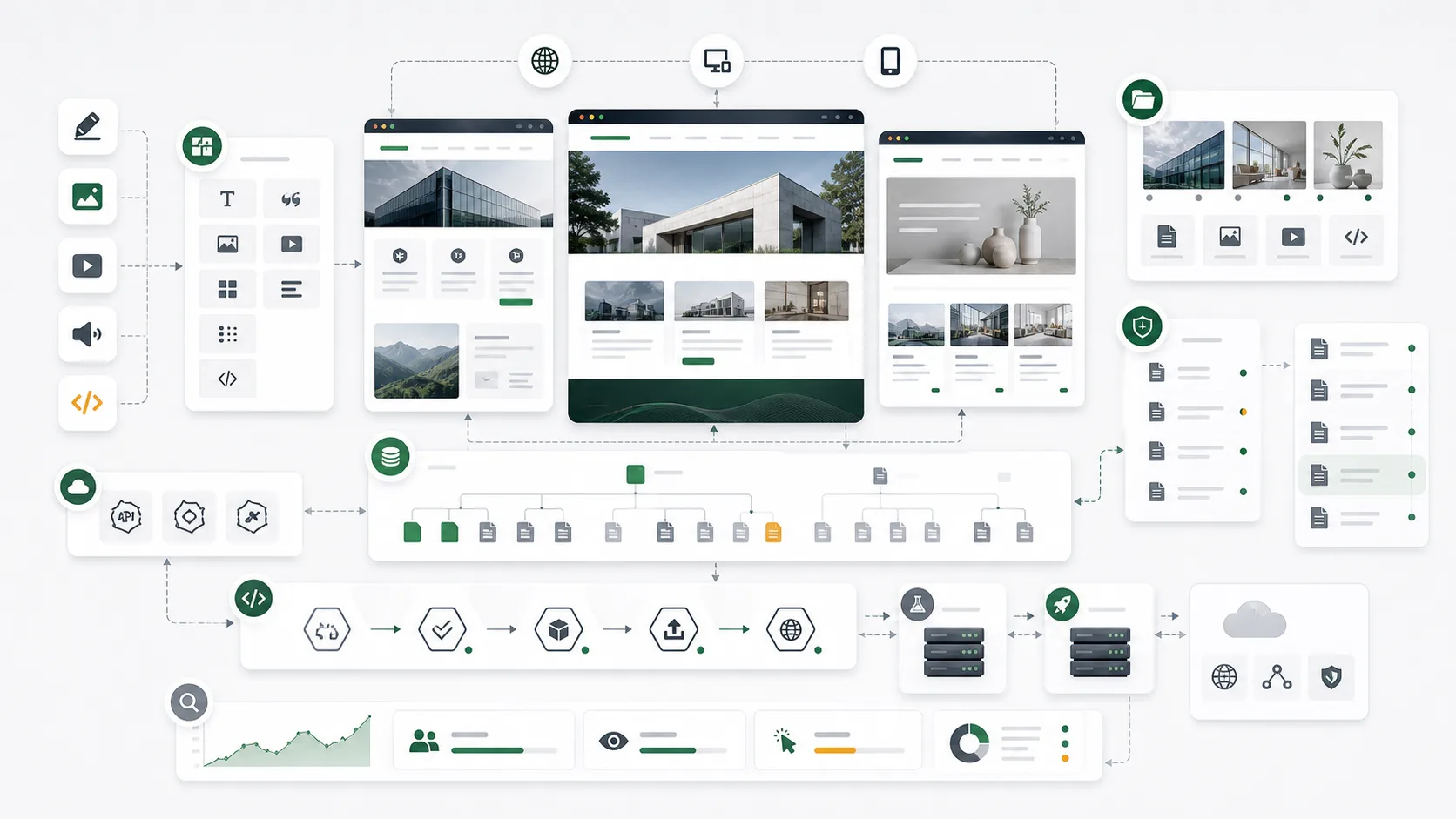
I used to treat brand sites lightly: a few pages, some copy, several images, and a deployment URL.
After building personal sites, company sites, and business sites, I now see a brand site as a small system. It may not have login or a database, but it still has content structure, SEO, language versions, image assets, document versions, and deployment boundaries.
Content Should Not Only Live Inside Pages
A brand site can start with content written directly inside pages. But once content grows, maintenance becomes harder.
Articles, project cases, privacy policies, terms, service descriptions, and about pages are difficult to maintain if they are scattered across components. MDX or structured content separates content from layout and makes lists, detail pages, SEO, and multilingual work easier.
I now prefer giving content its own place instead of hardcoding everything into UI.
Bilingual Is Not a Translation Toggle
Bilingual sites are easy to underestimate.
English and Chinese differ not only in copy. Routes, metadata, alternate links, sitemaps, whether articles are synchronized, and whether some articles exist in only one language all need handling. If these boundaries are unclear, SEO and user experience suffer.
I ran into this while building my own article system too. That is why the routes later started collecting slugs by locale, so an untranslated article would not be generated incorrectly in the other language.
Brand Assets Need Management
Icons, avatars, OG images, multiple PNG sizes, SVGs, and source files scatter quickly without rules.
I treat brand assets as something that lives near the code: where the source file is, where exported files go, which images are used by the site, which are used for social sharing, and which projects need synchronization after updates.
This work does not always look like development, but it affects long-term site maintenance.
SEO Is Structure, Not Keyword Cleanup
SEO should not be a keyword pass after the page is written.
Titles, descriptions, keywords, page hierarchy, internal links, image alt text, language versions, and sitemaps should be considered with the content structure. A natural title and accurate summary feel more human than keyword templates and are easier to maintain over time.
When I write articles now, I first think about what the reader might search for and what the page actually answers, then place keywords inside natural language.
Small Sites Still Have Long-Term Cost
The easiest thing to ignore about brand sites is that they keep changing after launch.
Content updates, articles increase, images are replaced, business boundaries shift, and SEO needs iteration. A clear structure early on prevents every update from feeling like a rebuild.
So when I look at brand sites now, I do not only judge the first viewport. I look at whether the site can keep being maintained. A site that can be updated for a long time is more valuable than a beautiful page that is hard to change.