
In a Digital O&M MVP, API Boundaries Appear Before Pages
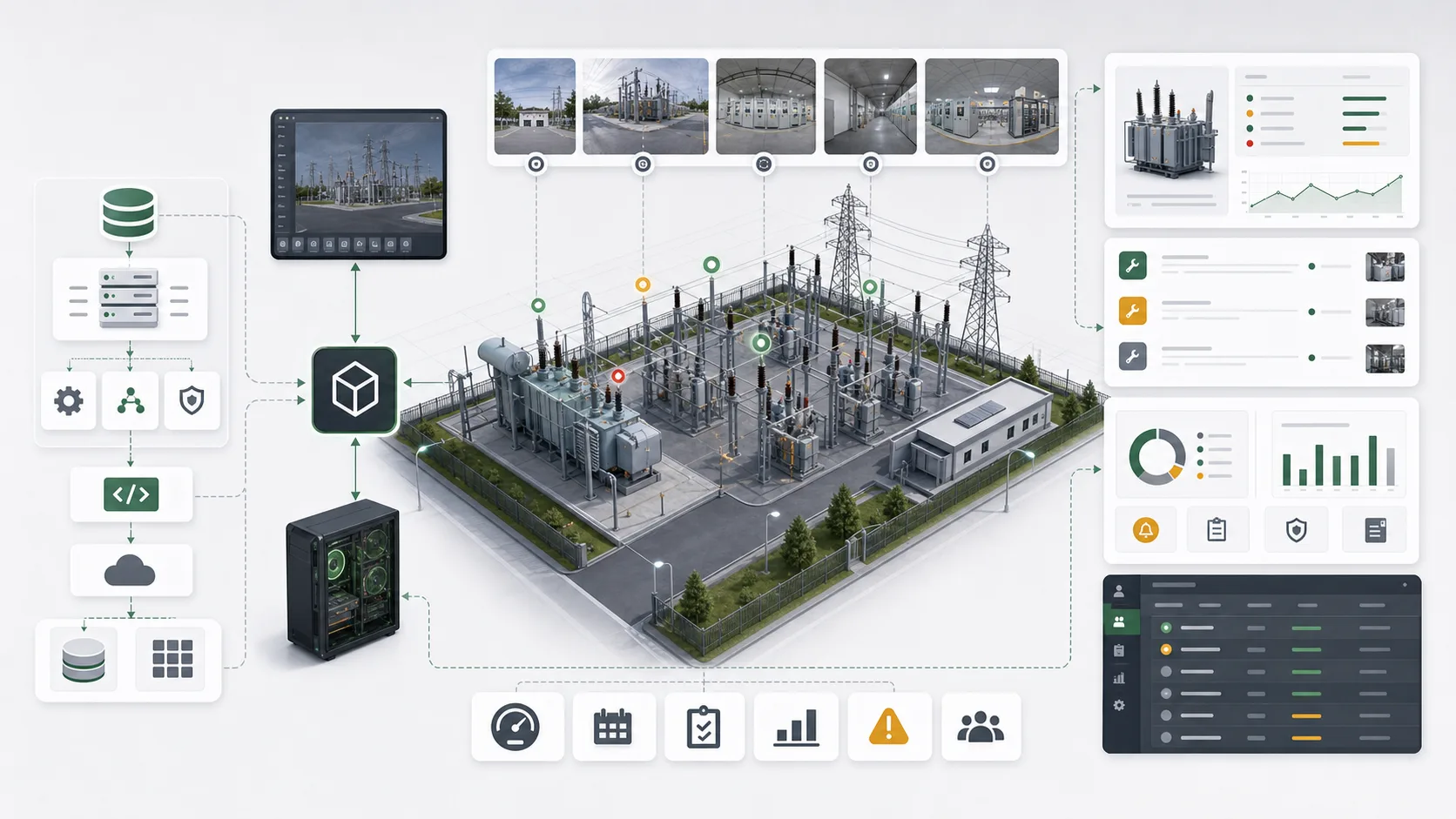
When I worked on a digital operations and maintenance MVP, the first pressure I felt was not page design. It was API boundaries.
The system did not only have a Web admin. It also needed to provide data to a UE client. Equipment information, station layout, panoramic photos, maintenance records, and spatial position all had to be manageable in the backend and correctly presented in the client.
The Client Needs Stable Data
A UE client is different from a web page. It cares more about scene, equipment, spatial position, and interaction state.
If the backend API is only a direct reflection of admin tables, the client becomes difficult to build. The client needs a more stable data structure closer to the scene: which areas belong to a station, which equipment belongs to an area, which materials and maintenance records attach to equipment, and which panoramas can be entered.
So I first think about how the client consumes data, then return to how the admin side should manage that data.
Admin Organizes the Data
The Web admin is not only for data entry.
It should help maintain equipment information, organize station structure, upload panoramas, manage maintenance records, and ensure that the client can read the data correctly. If the admin only optimizes for simple pages, the client has to handle too much dirty data and temporary logic.
I prefer the admin to take responsibility for organizing data, so the API can output clearer structures.
MVP Does Not Mean Boundaries Can Be Random
MVP is often understood as "make it usable first". That is reasonable. But usable does not mean boundaries can be arbitrary.
In digital operations projects, once an early API is consumed by a client, changing fields, structures, or meanings later costs more. Even if the first version is small, the core objects should be stabilized as much as possible.
If equipment, station, area, photo, and record concepts are mixed together early, they become harder to separate later.
Industrial Scenarios Depend on Context
Data in industrial and operations scenarios depends heavily on context.
An equipment record has limited value if it does not know which station and area it belongs to, which panorama it connects to, and which maintenance records it has. The backend may see tables. The client sees a spatial scene.
That is why I think about APIs early in this kind of system. An API should not expose the database. It should hand the client business context that the backend has already organized.
Even Small Cross-Client Systems Need Boundaries
This MVP taught me that even a small cross-client system needs clear boundaries early.
The Web admin maintains data. The API outputs stable context. The UE client presents scene and interaction. When this boundary is clear, the first version can stay light. When it is unclear, even a fast MVP starts creating rework quickly.