
Why I Chose to Build a Private Live Streaming System
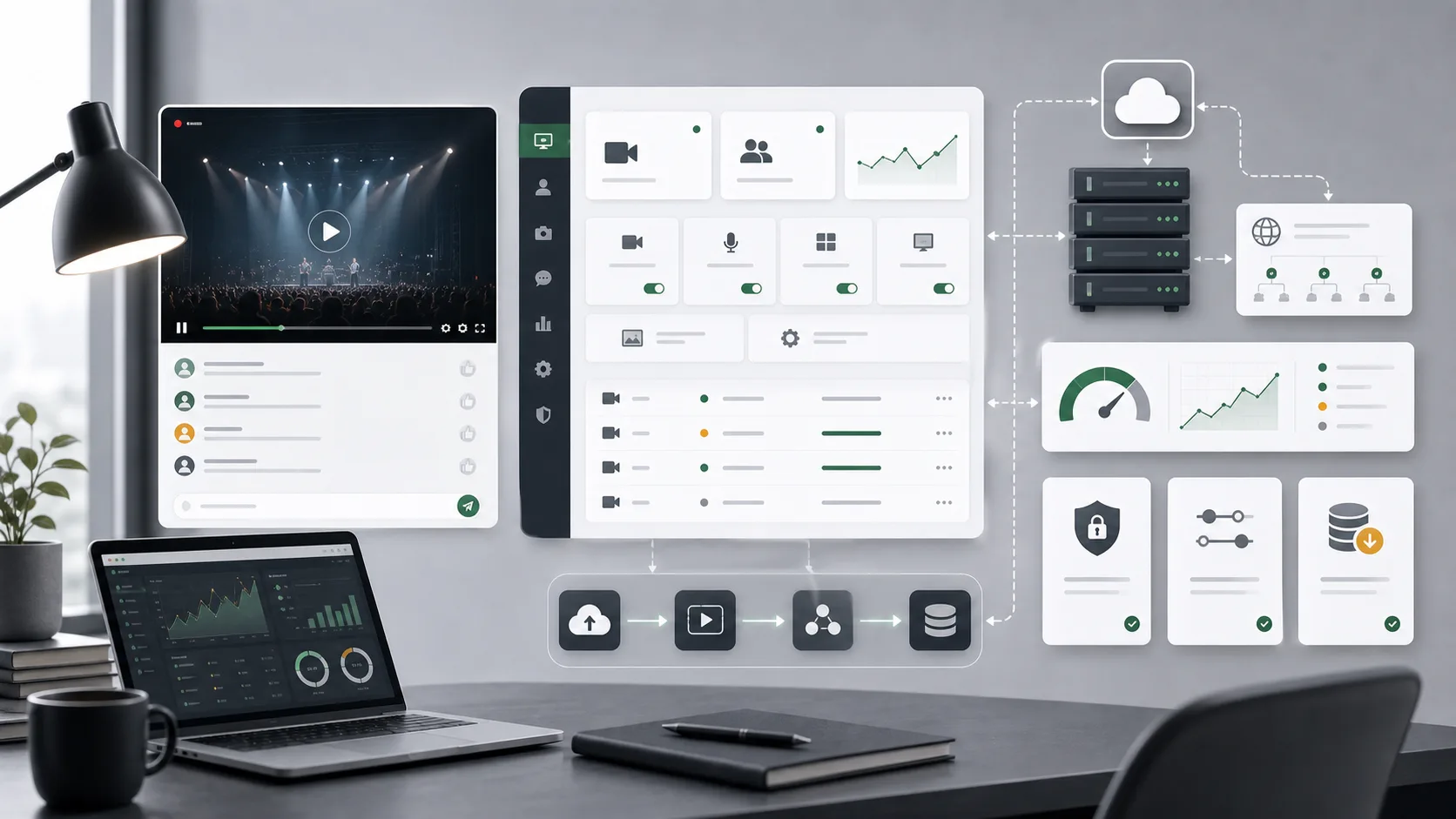
I did not start building a private live streaming system because the technology itself was new. I did it because the business scenario no longer fit full dependence on external SaaS platforms.
When live streaming is used to serve investment customers, cost and control become sensitive. External platforms are convenient at first, but they often charge by traffic, concurrency, or feature level. Over time, it becomes hard to understand the cost boundary. The business also cares about whether viewer entry points, customer data, and later operations can stay under its own control.
I Looked at Control Before Building
I do not treat building in-house as automatically better. In many cases, buying SaaS is the right choice. But when live streaming becomes part of the business rather than a one-off event tool, the question changes.
I cared about several types of control: whether the viewer entry could live inside our own system, whether customer access data could be retained, whether the page could be adapted to business needs, whether cost was predictable, and whether comments, online-user statistics, and customer touchpoints could later connect back into internal systems.
If all of that depends on an external platform, the system cannot grow deeper into the business.
A Live System Is Not Just a Player
The easiest misunderstanding is to see a live streaming system as a player page. The player is only one part of the viewer side.
Real operation needs backend live room creation, room management, viewer entry configuration, push-stream and callback handling, comment records, online-user statistics, history management, cloud services, domains, certificates, production hardware, and event workflow.
I was not building only a web page. I was building a live operations chain. Outside the code, there was hardware selection, staff workflow, production training, and later maintenance. Many problems did not end when a feature was finished. They ended only when the live session could run stably.
Comments and Online Counts Are Operational Data
Comments and online counts look like interaction features, but for the business they are also operational data.
Comments show whether customers are participating. Online counts show live-room heat and entry quality. If the system only displays these values without recording or structuring them, it becomes hard to judge whether a session worked.
I treat these capabilities as part of the foundation of the live system, not decoration. The early implementation can be simple, but the data structure and reporting definitions should not be missing.
Long-Term Operation Changes the Judgment
The most valuable experience did not come from the first launch. It came from what the system exposed after running for a long time.
Only after long-term operation can I see which features are actually used, which statistics are inaccurate, which entries fail easily, and which steps depend too much on human experience. When it is time to rebuild, those real traces matter more than the initial assumptions.
That became one of my habits when rebuilding systems: look at the operational traces left by the old system before deciding what the new one should solve. Without that, a rebuild easily becomes rewriting pages.
Building Means Owning the Responsibility
Building a private live streaming system is not about proving technical ability. It is about gaining long-term control. But the other side of control is responsibility.
Servers, bandwidth, player behavior, callbacks, comments, statistics, backend management, viewer pages, and production workflow can all break. When they do, someone has to own the problem. So when I look at build-versus-buy decisions now, I look at both the benefit and the maintenance pressure.
If the business truly needs long-term control over entry, data, and cost, building can be valuable. If the need is only occasional events, SaaS may still be better. The real question is not "buy or build"; it is whether the system is worth owning.